/projects/rev-2-stroke-engine
The Reference Engine
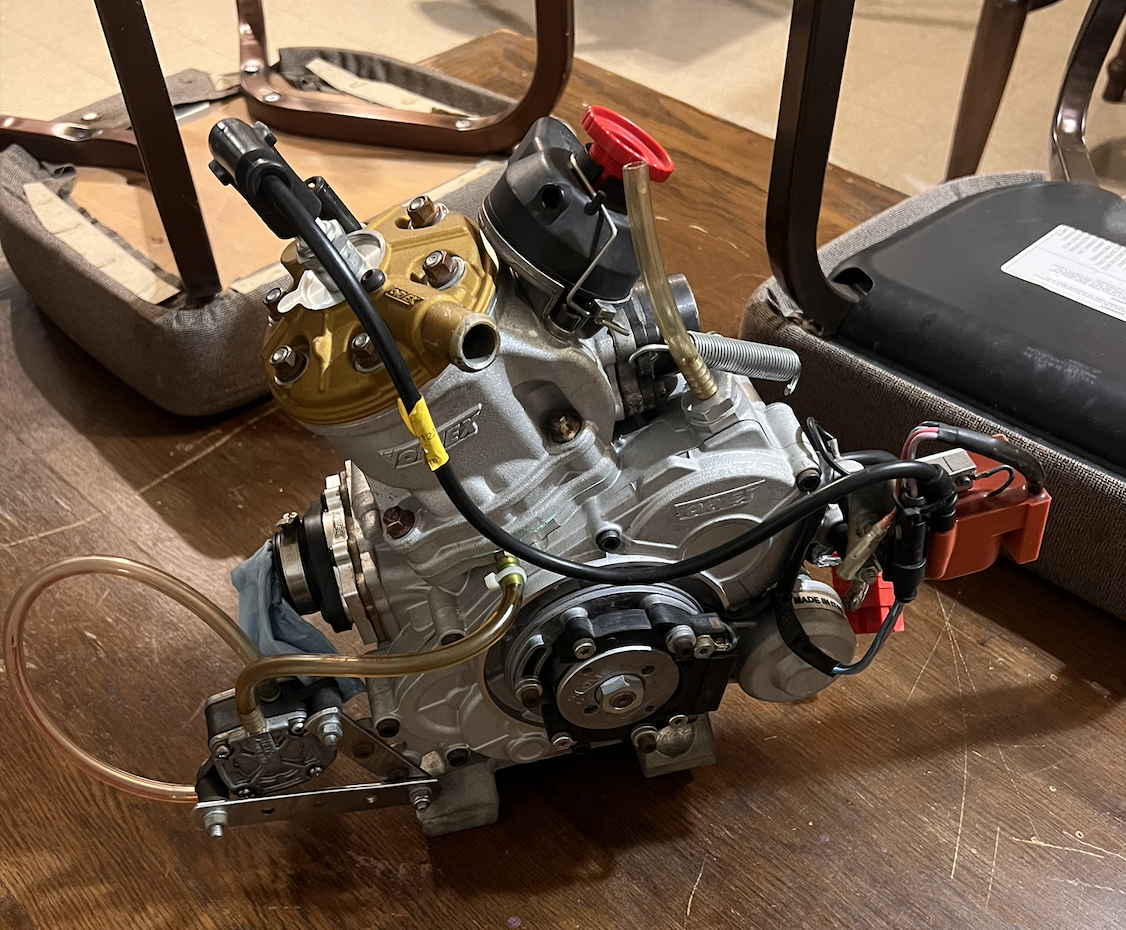
The base reference engine for this project is the Vortex ROK GP. It is a 125cc water-cooled 2-stroke engine that is crankcase scavenged with reed valves, features a balance shaft and power valve, and has a loop-scavenged flow path. It is meant for kart racing and has a prominent place in the American karting scene. The port layout is very similar to that of an Aprilia RS 125. I chose this engine for three reasons.
- I wanted a water-cooled engine to be able to experiment with different cooling temps.
- I wanted a 125cc engine since that is a popular displacement for multi-cylinder engines.
- It had a balance shaft. A big problem I've noticed with single-cylinder 2-strokes is vibration. I've never used a 2-stroke with a balance shaft, so I thought it would be interesting to experiment with.
- Although not a core reason, I did find this engine on Facebook Marketplace for a great price locally…
The engine was bought in excellent condition, and no internal damage was found during the first teardown. It also came with all the auxiliary equipment to run. A slightly regretful decision was made after purchase: tear down the engine. I was very excited to start modeling the engine, but I didn't get any dyno runs before this. This meant I had no reference experimental data at the start and would have to wait until the engine was rebuilt. A lesson for the future.
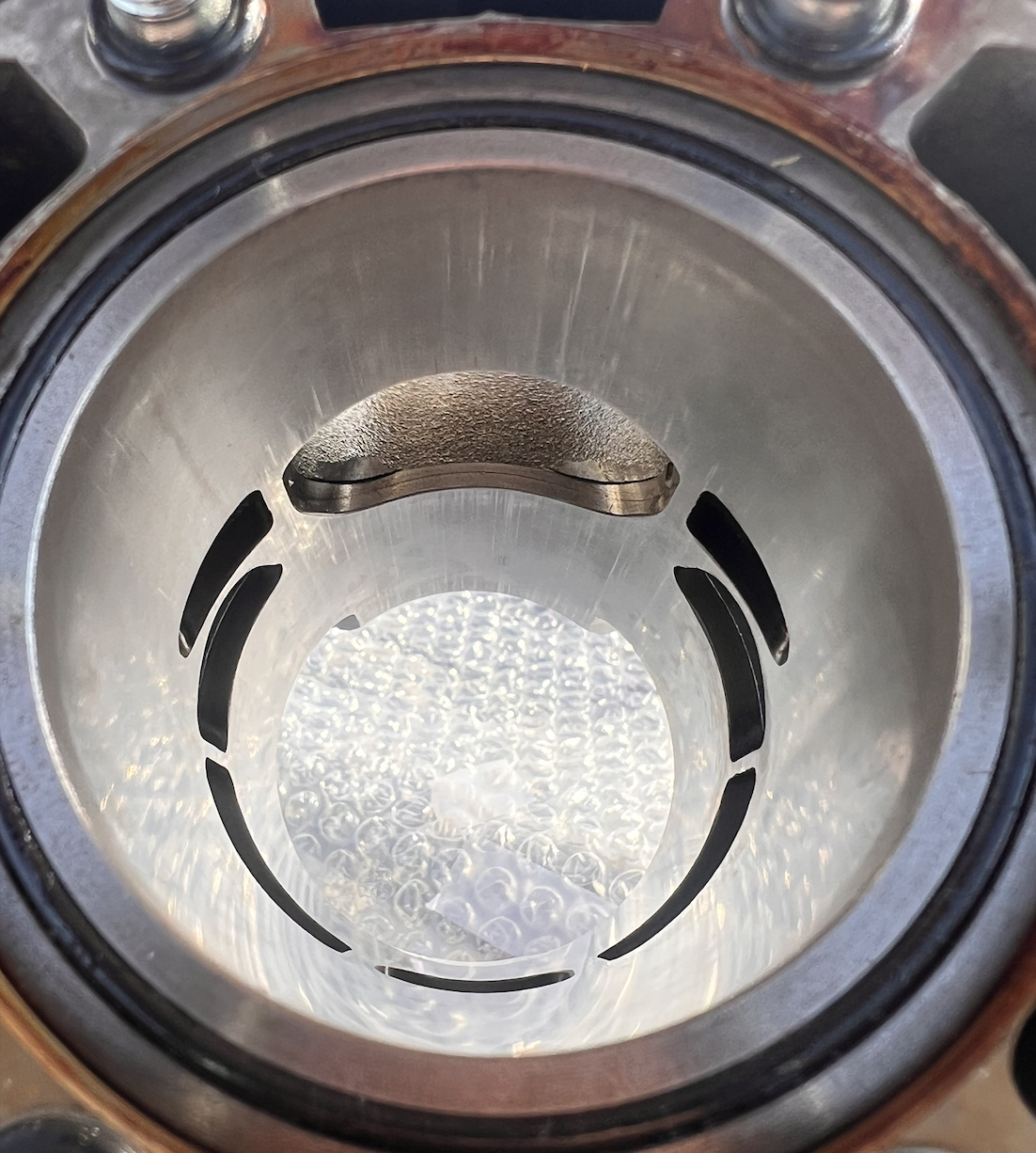
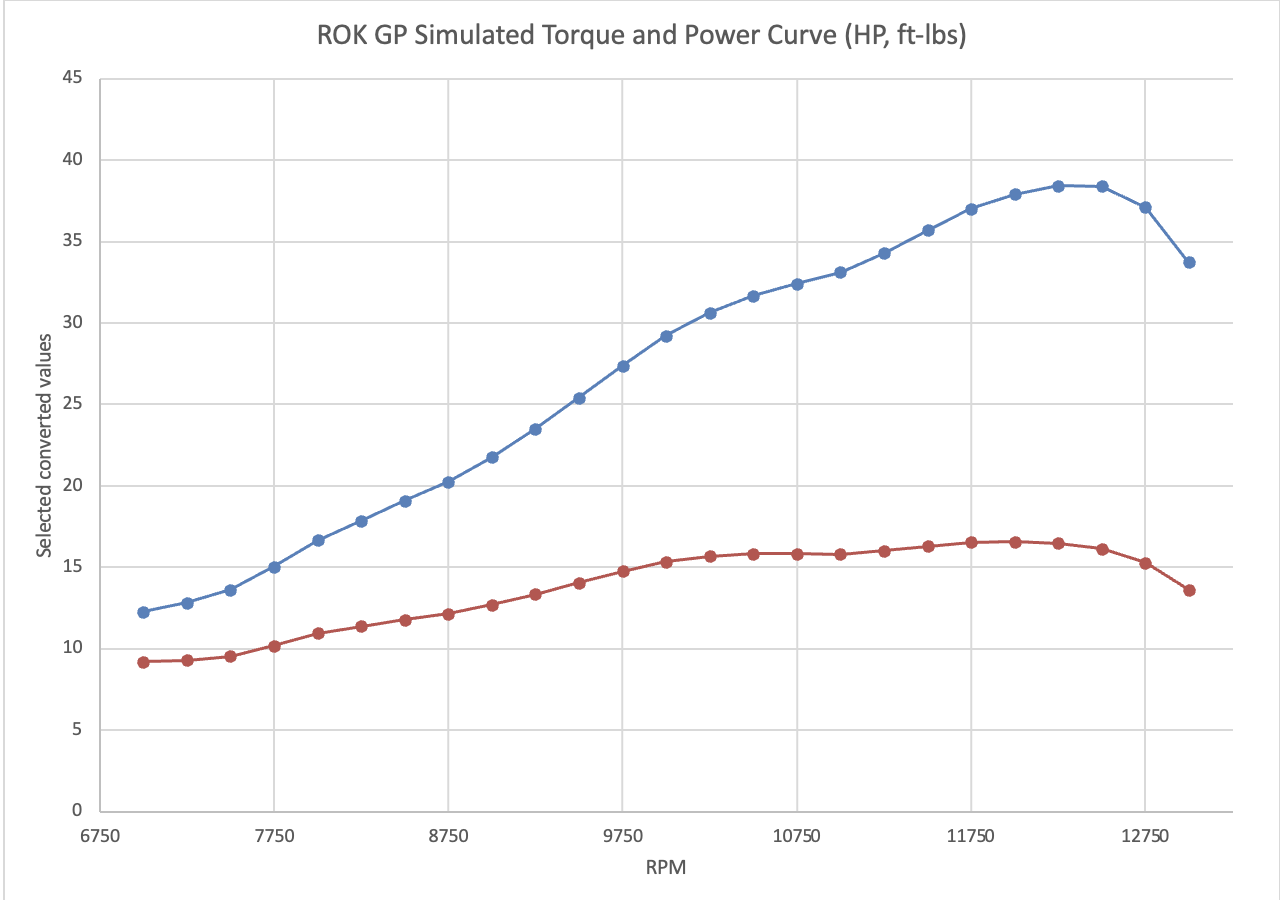
The modeling process was quite successful for defining the geometry of the engine and created great results inside of EngMod2T.
I also managed to begin a first CAD model of the port geometry. This was a difficult profile to measure accurately, and some measurements (like the transfer axial angles) seem to record different results each measurement round. Because of this error, an average was taken for a lot of the measurements. This created a low-confidence result for me and is something that I will be going back to redo with a molding compound called Versimold Red to pour into the transfer and exhaust ports to then remove and 3D scan.
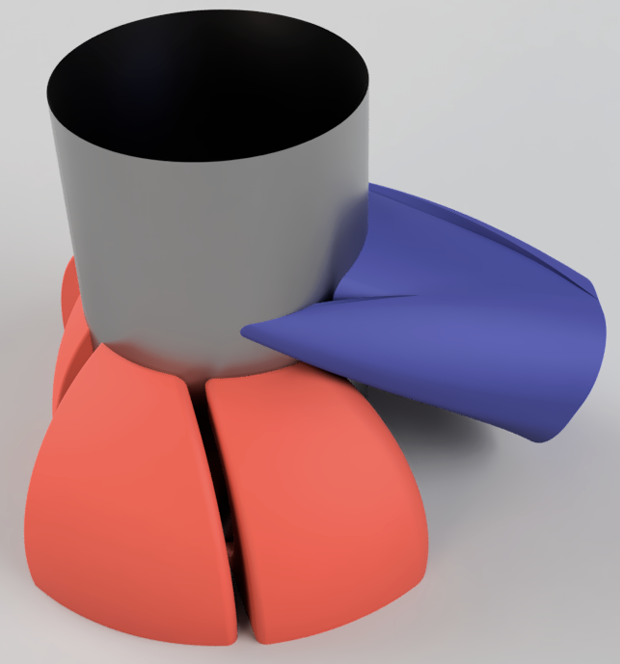
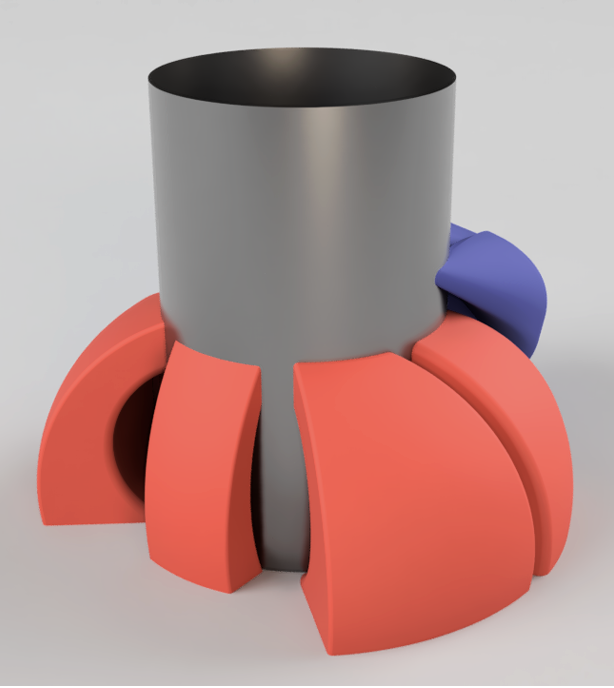
One of the initial problems I do see with this engine is the placement of the balance shaft. It is currently directly behind the exhaust passage. The internal passageways for the coolant also pass around the casing of the balance shaft. This is a problem because when fabricating a REV housing (that will likely be attached to the cylinder), it will be sitting lower than OEM cylinder. Some quick simulations show that a 40- 50 mm diameter REV is required to get the required timing. This puts the REV just right above the housing for the balance shaft, and some clearance modifications will have to be done.
Besides this, the engine will work as a great reference model for now and might be changed down the line.